About Me

My name is Euniceca Marseille, and I attend Wesleyan University, majoring in Government and French. My interests include politics, immigration, and critical theory, which are shaped in large part by my background as a Caribbean person. My work often explores questions of migration, identity, and belonging, both in academic contexts and everyday life.

Outside of my studies, I’m deeply interested in film and television and consider myself a self-critic, always analyzing what I watch beyond the surface. I also talk a lot, and I’ve come to see my inability to separate myself from my yapping not as a flaw, but as a method: it’s how I think, question, and engage with the world.

It started with my intergration at Wesleyan


The first lesson in college is often about socializing with people. I struggled with social anxiety and usually found it difficult to present myself through clubs, dining halls, or classroom interactions. But my experience in theater during high school had prepared me to navigate these challenges smoothly. Stepping into a new community at Wesleyan felt like starting a new show entirely —a stage I had never performed on before, but one where I could apply what I had learned.


In high school, I dedicated myself to the arts both in and out of school. I participated in a play, and I even sang. I was dedicated and respected the people who loved the arts. Still, when I came to the school, I had no intention of pursuing theater; I needed familiarity to open myself. I was, of course, hesitant about Wesleyan’s much bigger theater program, but I had taken a leap of Faith.


Two courses at Wesleyan shaped my confidence and voice. An introductory theater course, it taught about the works that shape the performing arts today, as well as the conversations that critique them to be better. It became A significant shift in perspective from what was presented to me in high school. The second course propelled me to speak up and contribute to the details of my person. This late-night, three-hour weekly theater class had only one other student enrolled, creating a space where I could actively participate.   I worked with formerly incarcerated individuals who would come to the class, share their stories about their experiences in the U.S. justice system, and I had to speak and ask them riveting questions because their stories carried a great deal of weight. I talk so much, and in there, I found myself giving more to them and to the people around me. In the end, I had a chance to perform the monologue of an individual whose story has shaped me and the way I speak up to others.


Now, you can find me as the financial manager for SHADES, the theater collective for students of color on campus. I have managed to work as an assistant director for a small play titled “All about Adeaze.” I worked in the spring of 2025 as a coordinator in collaboration with Spike’s stage for the cabaret, and I  again worked in the fall of 2025 to put on a great cabaret show.


Shades is not as big on campus, which is why it’s perfect for me, and so are all the theater ventures I have participated in. I don’t have to worry about big productions; it still allows me to actively contribute, meet a tiny subset of individuals in the arts, and, more importantly, build myself socially.  through the friends I have and the interactions I have had to make from my awkward self.  All because I allow familiarity to become the means through which I navigate my then-new social life.

Folding under pressure

It was through the class titled “Rap, Theater, and Social Justice” that I began to truly open myself. Rap, Theater, and Social Justice was a three-hour class with only one other student. Because of the small numbers and length of the class, I was required to step out of my comfort zone and participate every day. I had no excuse to say the class had too many students, so my anxiety would not allow me to speak. 

Each week, we had people who were incarcerated come speak to us and share their experiences.  rearrange their words and recite them as verbatim pieces. The individuals speaking were great because they always had stories to tell about their lives and their battles with the U.S justice system, but it was up to my other classmates to come up with creative questions, good follow-up questions, and maximize the amount of information that they were giving to us. In one class, my classmate was sick, and I had to lead the conversation by myself for an extended period of time.

I am pretty sure that was the most I had spoken in class in years. Although I am talkative by nature, it never translated into my academic or social endeavors, as I present myself as a shy, closed-off individual. However, if you were to ask my close friends and family, they would say I’m known as the parrot because I don’t stop talking. At the end of the course, I had a final performance, where I presented one of the visitors’ stories. needed to be projective, evocative, and interpret the emotions of the visitor to my audience. 

This class forced me to speak more than I wanted to or ever intended to in any of my classes, but because of this, it allowed me to be more confident in speaking and projecting my voice in my other classes and different social spaces.

Finding my Rhythm

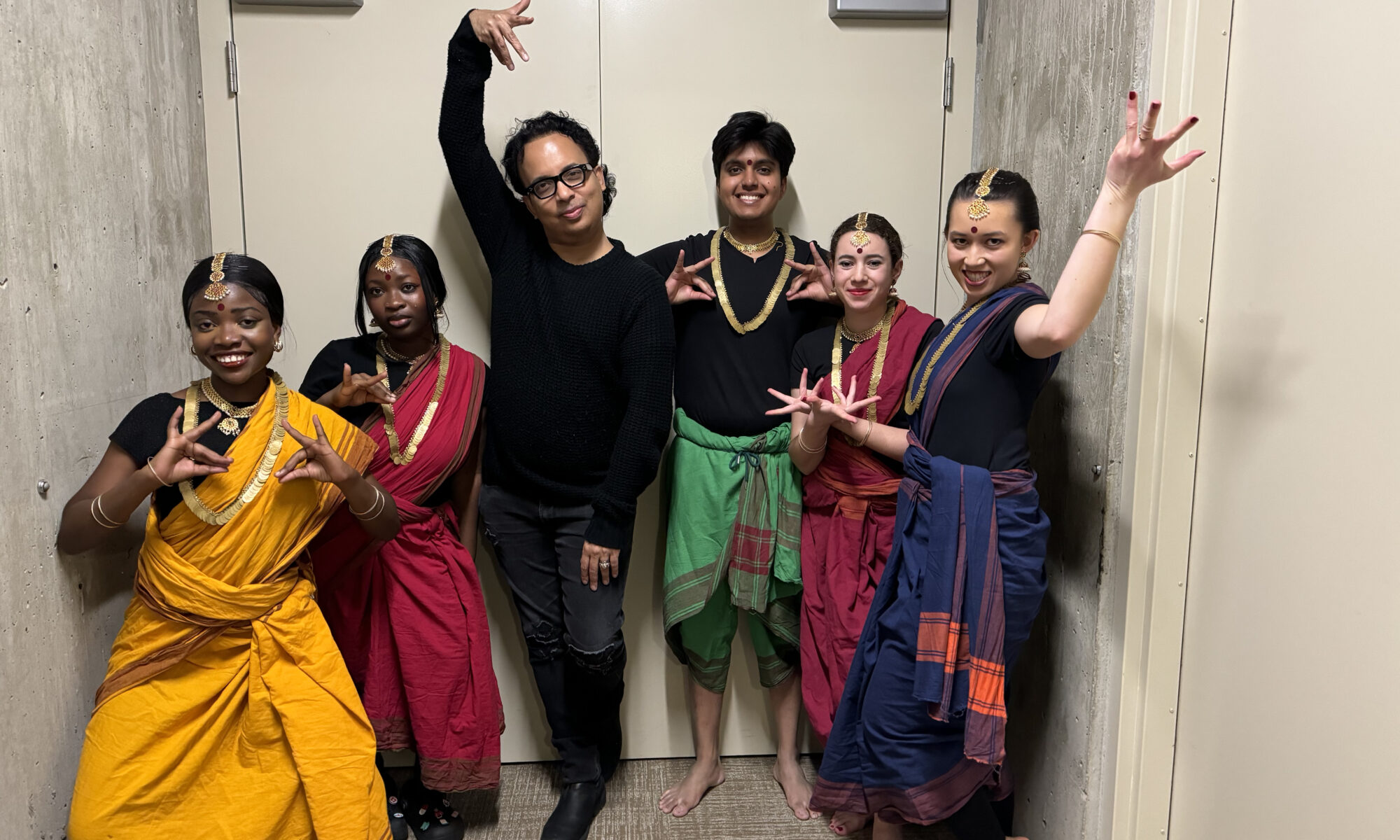
I love how freeing dancing is. It allows me to explore my body in ways I never thought I could. The dance classes I have taken at Wesleyan pushed me to become more aware of my body, down to movements I had never consciously noticed before. Each class offered a different way of understanding how I move through space, but the one that stayed with me the most was Bharatanatyam.

Bharatanatyam was both rewarding and extremely challenging. The form relies heavily on the half-seated position, which demands strength and endurance. Without the proper muscle development, holding that position can be painful, and at times it was. To push myself through the foundational steps, I practiced during breaks from studying, treating movement as both discipline and release. The professor encouraged us to record class sessions, which allowed me to revisit difficult sequences and practice at my own pace. That flexibility became essential to my progress.

What made the experience even more meaningful was how unfamiliar the form was to me. Bharatanatyam is a South Asian dance style, and where I am from, movement is expressed very differently. Even the way the body is positioned and used felt foreign at first. Learning this form forced me to move beyond what felt natural and comfortable, asking me to engage with a cultural practice outside my own. By the end of the course, I not only felt physically stronger, but also more open to learning through unfamiliarity. Dance became a way for me to challenge myself while still finding joy in the process.

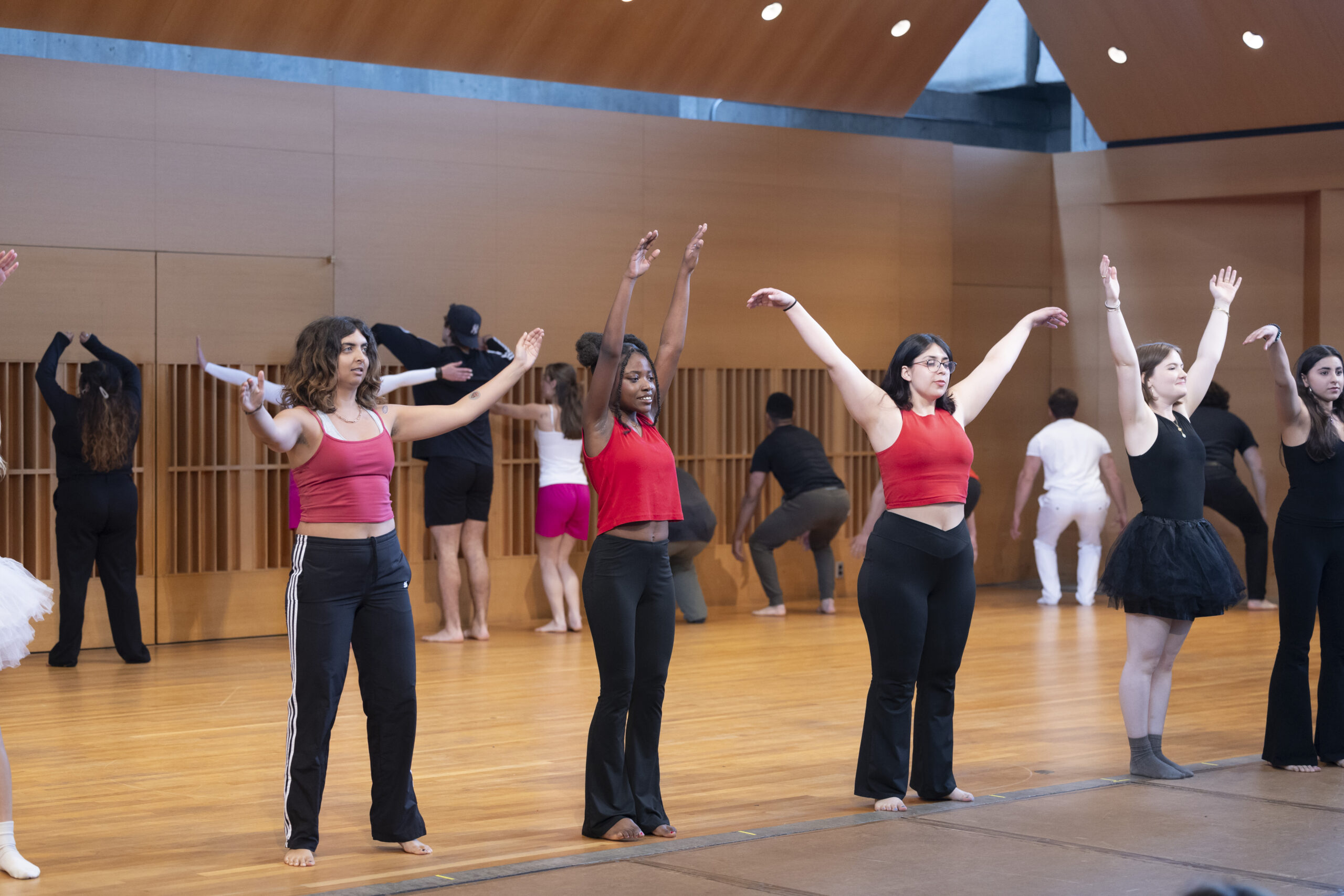
An introduction to dance shaped me in a different but equally important way. While Bharatanatyam taught discipline through form, this class encouraged expression and voice. It asked me to speak about movement, intention, and meaning, things I often struggle to articulate in group settings. One of the most affirming moments of the course came when a poem I had written was selected to be spoken over the speaker as the audience entered. Hearing my words set the tone for the space allowed me to recognize that my voice had weight, even when spoken softly. That experience pushed me to participate more openly and to trust that what I had to say mattered.

css.php