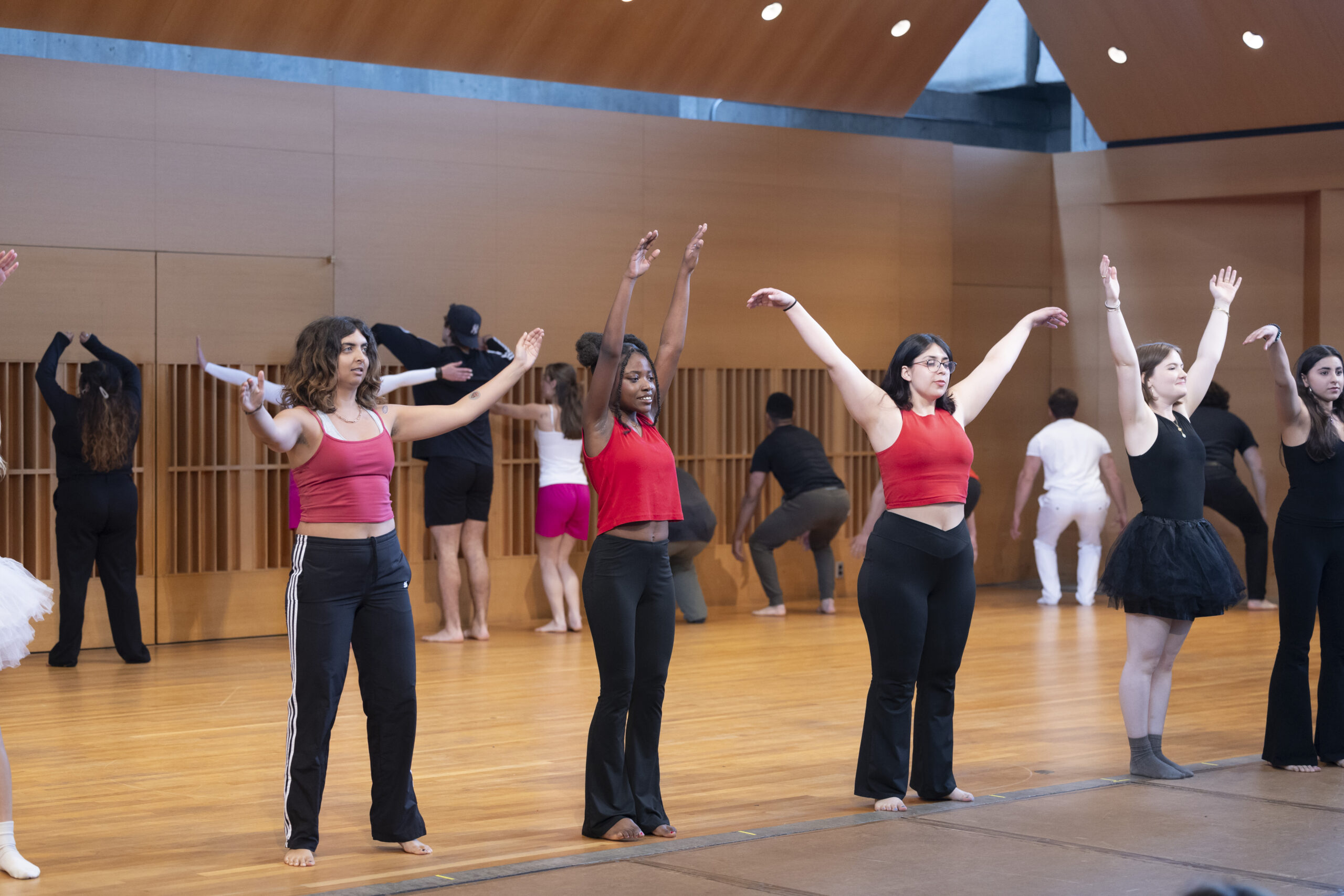
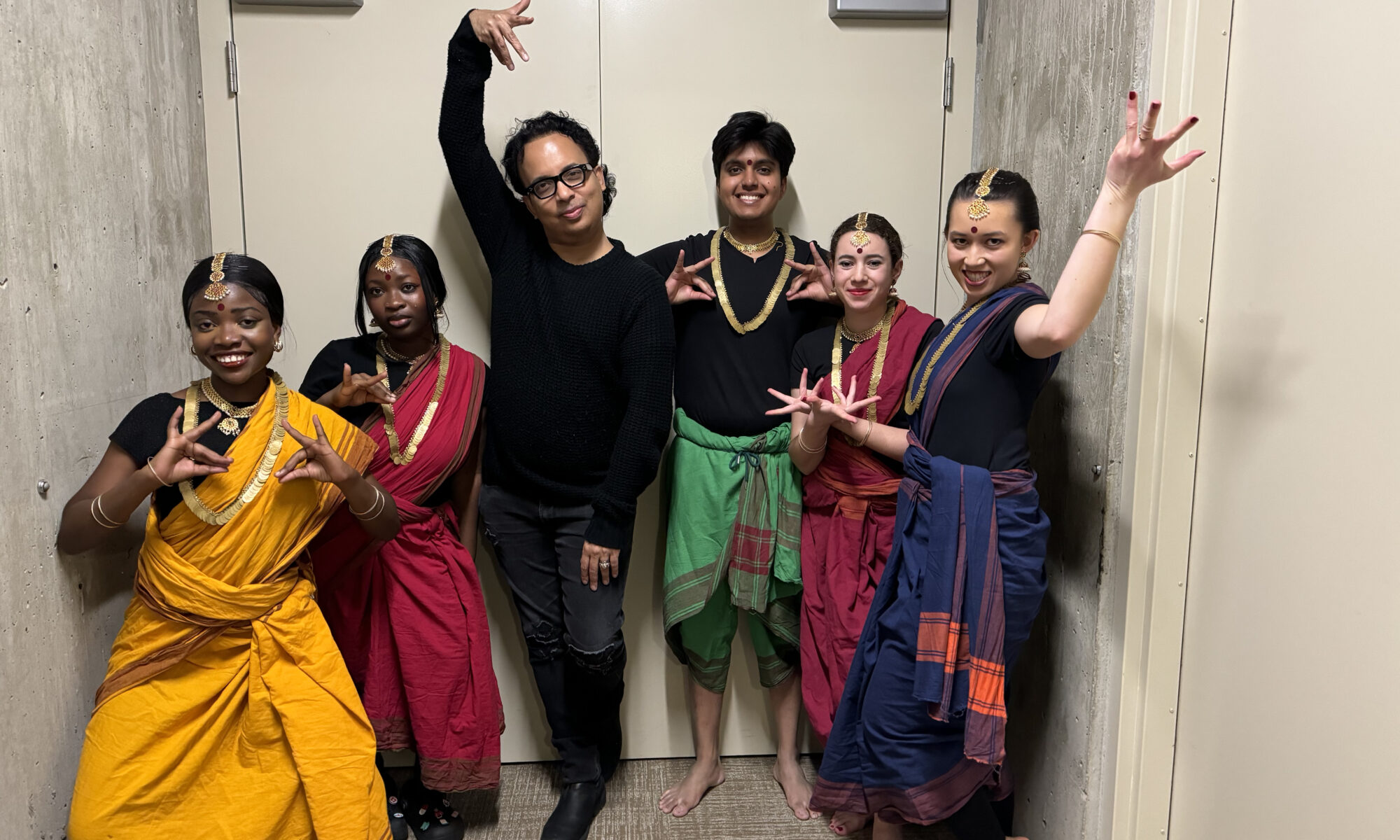
I love how freeing dancing is. It allows me to explore my body in ways I never thought I could. The dance classes I have taken at Wesleyan pushed me to become more aware of my body, down to movements I had never consciously noticed before. Each class offered a different way of understanding how I move through space, but the one that stayed with me the most was Bharatanatyam.
Bharatanatyam was both rewarding and extremely challenging. The form relies heavily on the half-seated position, which demands strength and endurance. Without the proper muscle development, holding that position can be painful, and at times it was. To push myself through the foundational steps, I practiced during breaks from studying, treating movement as both discipline and release. The professor encouraged us to record class sessions, which allowed me to revisit difficult sequences and practice at my own pace. That flexibility became essential to my progress.
What made the experience even more meaningful was how unfamiliar the form was to me. Bharatanatyam is a South Asian dance style, and where I am from, movement is expressed very differently. Even the way the body is positioned and used felt foreign at first. Learning this form forced me to move beyond what felt natural and comfortable, asking me to engage with a cultural practice outside my own. By the end of the course, I not only felt physically stronger, but also more open to learning through unfamiliarity. Dance became a way for me to challenge myself while still finding joy in the process.
An introduction to dance shaped me in a different but equally important way. While Bharatanatyam taught discipline through form, this class encouraged expression and voice. It asked me to speak about movement, intention, and meaning, things I often struggle to articulate in group settings. One of the most affirming moments of the course came when a poem I had written was selected to be spoken over the speaker as the audience entered. Hearing my words set the tone for the space allowed me to recognize that my voice had weight, even when spoken softly. That experience pushed me to participate more openly and to trust that what I had to say mattered.